- Basement Wall Sealing
- Nov 17, 2026
- 7 min read
Heavy rain makes a Columbus basement leak because the soil around the foundation fills with water faster than it can drain, and that water pushes in at the weakest spot it can find. The cause is usually one of five things: gutters, grading, a window well, the floor-wall joint, or a sump pump that cannot keep up. This guide covers how to tell which one it is and what to do first.
Why does heavy rain make a Columbus basement leak?
Heavy rain makes a basement leak because saturated soil pushes water against the foundation, and concrete is not waterproof. That push is called hydrostatic pressure, and it forces water through cracks, joints, and even the pores of the concrete. Angi explains that the water table rises with the rain, and the pressure follows it.
Columbus has plenty of rain to work with. The city averages about 39.31 inches a year, and July is the wettest month at about 4.7 inches. August 2026 was far beyond that: the National Weather Service logged 9.94 inches, more than 2.5 times the normal 3.74 inches, and the second-wettest August on record behind 2003. On August 20 alone, 2.87 inches fell, a record for that date.
The ground does not help much. A New Albany city guide notes that some areas of Franklin County have clay-heavy, poorly draining soils, and that about 85% of Ohio land is affected by a seasonally high water table. Clay holds water against the wall long after the rain stops, which is why some basements leak hours or even days after a storm.
Where does the water get in?
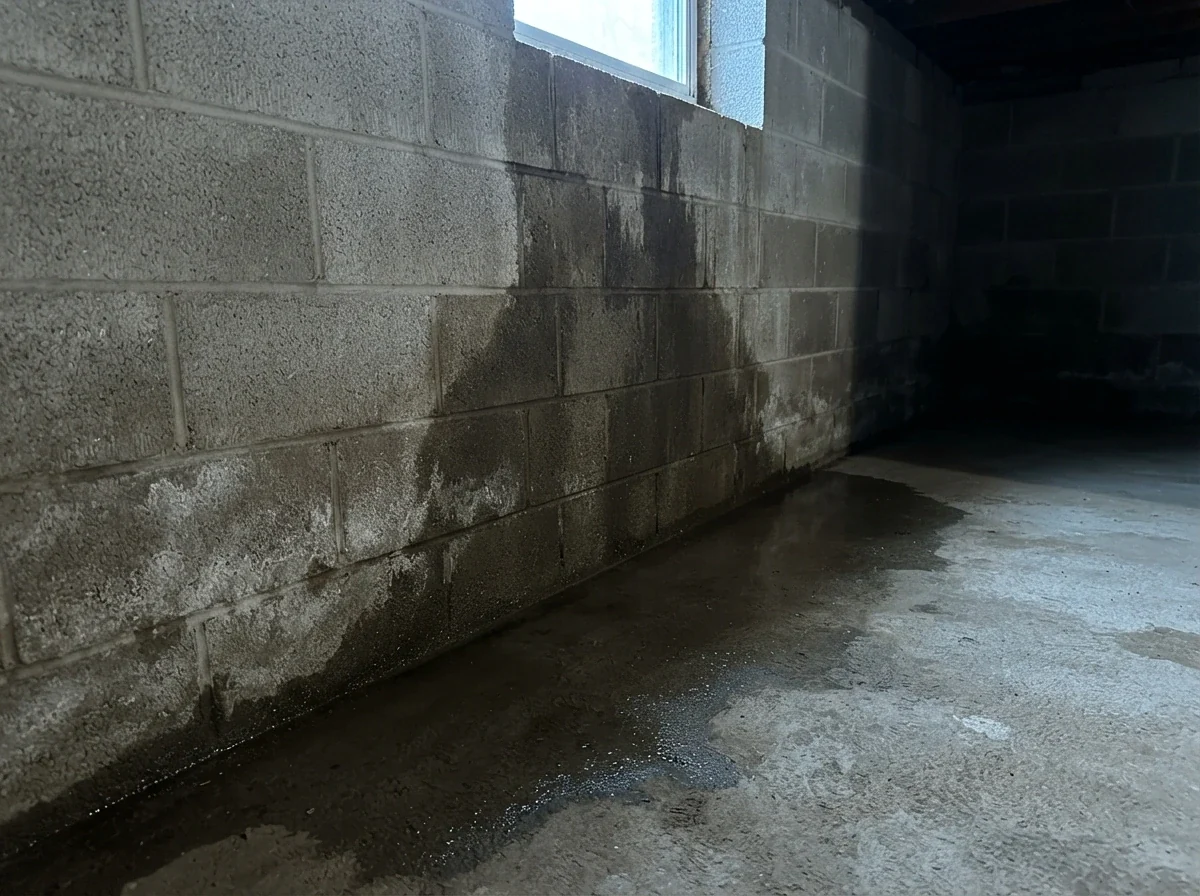
The most common entry point is the cove joint, the seam where the basement floor meets the wall. It is a natural cold joint in the concrete, and groundwater finds it first. Cracks in the wall, window wells, and openings around pipes come next.
- Cove joint: water seeps up along the base of the wall and spreads across the floor
- Wall cracks: vertical shrinkage cracks and stair-step cracks in block walls leak after storms, often leaving a stain trail below the crack
- Window wells: a well with no drain fills like a bucket and pushes water through the window frame
- Pipe and utility openings: unsealed penetrations let in a steady trickle
- Floor cracks and the slab itself: water rises through them when the water table climbs above the floor
Where the water shows up is a clue. A damp line along the wall base points to the cove joint, a stain under one window points to the well, and a single wet streak below a crack points to the crack. Take photos of each spot and note the date, so the contractor sees the pattern you saw.
How much water does your roof send to the foundation?
One inch of rain on a 1,000-square-foot roof produces about 623 gallons of water, according to University of Arkansas extension guidance. Most Columbus homes have a roof larger than that, so a single storm can send well over a thousand gallons down the gutters.
Where that water lands matters. A downspout that ends at the wall dumps hundreds of gallons into the soil right beside the foundation. One waterproofing company calculates that a 1,000-square-foot roof with four short downspouts puts about 150 gallons per inch of rain beside the wall at each one. New Albany’s guidance for Franklin County homeowners says to end downspouts and sump discharge at least 3 to 4 feet from the foundation, and many codes and installers call for longer extensions of 5 to 10 feet.
Check this first, because it costs the least. Clean the gutters before fall and spring, make sure the downspouts are attached, and add extensions that carry water well away from the house. Water that never reaches the foundation never has to be pumped out of the basement. If the yard still holds water after the gutters are fixed, a French drain can carry it to a safe outlet.
Does the slope of your yard matter?
Yes. The International Residential Code asks for the ground to fall at least 6 inches within the first 10 feet from the foundation, which is about a 5% slope. Hard surfaces such as patios and walkways within 10 feet should slope at least 2% away from the house.
Older yards often lose that slope. Soil settles beside the foundation, mulch builds up, and patios and walks tilt back toward the house. A flat or reversed grade lets rain collect against the wall. When lot lines or walls make 6 inches of fall impossible, the code calls for swales or drains to carry water away.
The City of Columbus says the property owner is generally responsible for grading that moves stormwater away from the house toward the nearest storm sewer or drainage system. A quick test: lay a straight board from the foundation out 10 feet, set a level on it, and measure the drop. If it is under 6 inches, adding soil and re-sloping is often an inexpensive fix. Also look for places where the foundation backfill has sunk, since that is where water pools.
Could the sump pump be the problem?
A sump pump can be the reason the basement floods even if the rest of the system is fine. Angi lists a sump pump failure as a common cause of water on the floor, whether the motor burns out, shorts out, or the power goes out. Storms that bring the heaviest rain are the same ones that knock out electricity.
Columbus saw this in August 2026. A line of storms on August 11 cut power across the city, and the rain continued for days. A pump with no battery backup does nothing when the grid is down. Angi says a sump pump lasts about 7 to 10 years with good maintenance, so an older unit is a likely weak point.
- Lift the lid and pour a bucket of water into the pit; the pump should start and empty it in seconds
- Listen for grinding or constant running; both are warning signs
- Check the discharge line outside for clogs, freezing, and a safe outlet
- Think about a battery backup if the basement is finished or the pump is the only protection
Our sump pump installation page covers sizing, backup options, and costs in more detail, and our guide on how long a sump pump lasts in an Ohio basement shows how long a pump should last.
How can you tell what kind of leak you have?
The timing of the leak tells you most of what you need to know. Water that shows up during the storm usually comes from the surface: gutters, grading, or window wells. Water that appears hours or days after the rain stops usually comes from groundwater rising to the footing, a clogged drain tile, or water stored in a block wall.
- During the rain: look at downspouts, window wells, and the yard slope
- One to six hours after: look at the footing drain, the sump pit, and the cove joint
- Days later: suspect block-wall cores releasing stored water or a high water table
- Water rising from a floor drain: treat it as a sewer backup, not a foundation leak
The sewer case needs a different response. If the floor drain backs up, report it right away to the City of Columbus Sewer Maintenance Operations Center at 614-645-7102, which runs 24 hours, or call 311. A backup must be reported within 24 hours for the city to determine the cause, and a home may qualify for the Project Dry Basement backflow device if excess rain in the sanitary sewer caused it.
Humidity can also mimic a leak. If the wall is damp but there was no storm, tape a square of plastic to it for a day or two. Moisture under the plastic means water through the wall, and moisture on the room side points to condensation. The test is a rough indicator, not a diagnosis.
What should you do while the basement is leaking?
Stay safe first, then limit the damage. Water and electricity are a dangerous mix, so stay out of standing water if it is near outlets, the panel, or plugged-in appliances, and shut off power only if you can reach the panel without stepping in water.
- Move belongings, boxes, and furniture away from the walls and off the floor
- Take photos and video of the water and the damage, with the date
- Use a wet vacuum or a pump on an outside power line, and do not pump a deeply flooded basement all at once: FEMA says to remove about a third of the water per day
- Run fans and a dehumidifier and open materials that stay wet
Speed matters for mold. The EPA says that if wet materials are dried within 24 to 48 hours, mold usually will not grow, and that you should assume mold growth if a flooded home was not dried in that time. Aim to keep indoor humidity below 60%, and ideally between 30% and 50%. If the water is sewage or has been in the house longer than a day or two, call a professional and read our emergency basement leak repair page for the full list of steps.
What fixes a basement that leaks after heavy rain?
The fix depends on where the water enters, and the cheapest options come first. Gutters, downspout extensions, yard grading, and window well covers or drains cost the least and solve a large share of storm leaks. If water still gets in, the next steps are targeted: injection for a leaking crack, a sump pump upgrade, or an interior drain.
- Gutters, downspouts, and grading: a few hundred dollars to a couple thousand, depending on the work; Angi lists yard grading at $500 to $3,000 for a full project
- A leaking crack: epoxy or polyurethane injection, which cost roughly $250 to $900 per crack in national guides
- Water at the floor-wall joint: an interior drain with a sump pump, typically $40 to $100 per linear foot according to HomeAdvisor
- Water through walls from outside pressure: exterior waterproofing, which costs far more because of the dig
For whole-system costs (our Columbus waterproofing cost guide has the full breakdown), Angi lists a Columbus range of $3,180 to $11,639 for basement waterproofing, and HomeAdvisor lists $2,878 to $10,530. Treat these as ranges, not quotes, because price depends on the method, the wall length, and access. A good contractor will find the source first and tell you which of those steps your basement actually needs. Before you sign, ask for the cause in writing, itemized pricing, proof of liability insurance, and the warranty terms. If you want a written diagnosis for your own house, talk to our Columbus basement waterproofing team and bring the photos and dates you collected.
Rainfall figures: National Weather Service data, via Axios and WCBE. Cost figures: Angi and HomeAdvisor national and Columbus-area ranges.
Share this article :