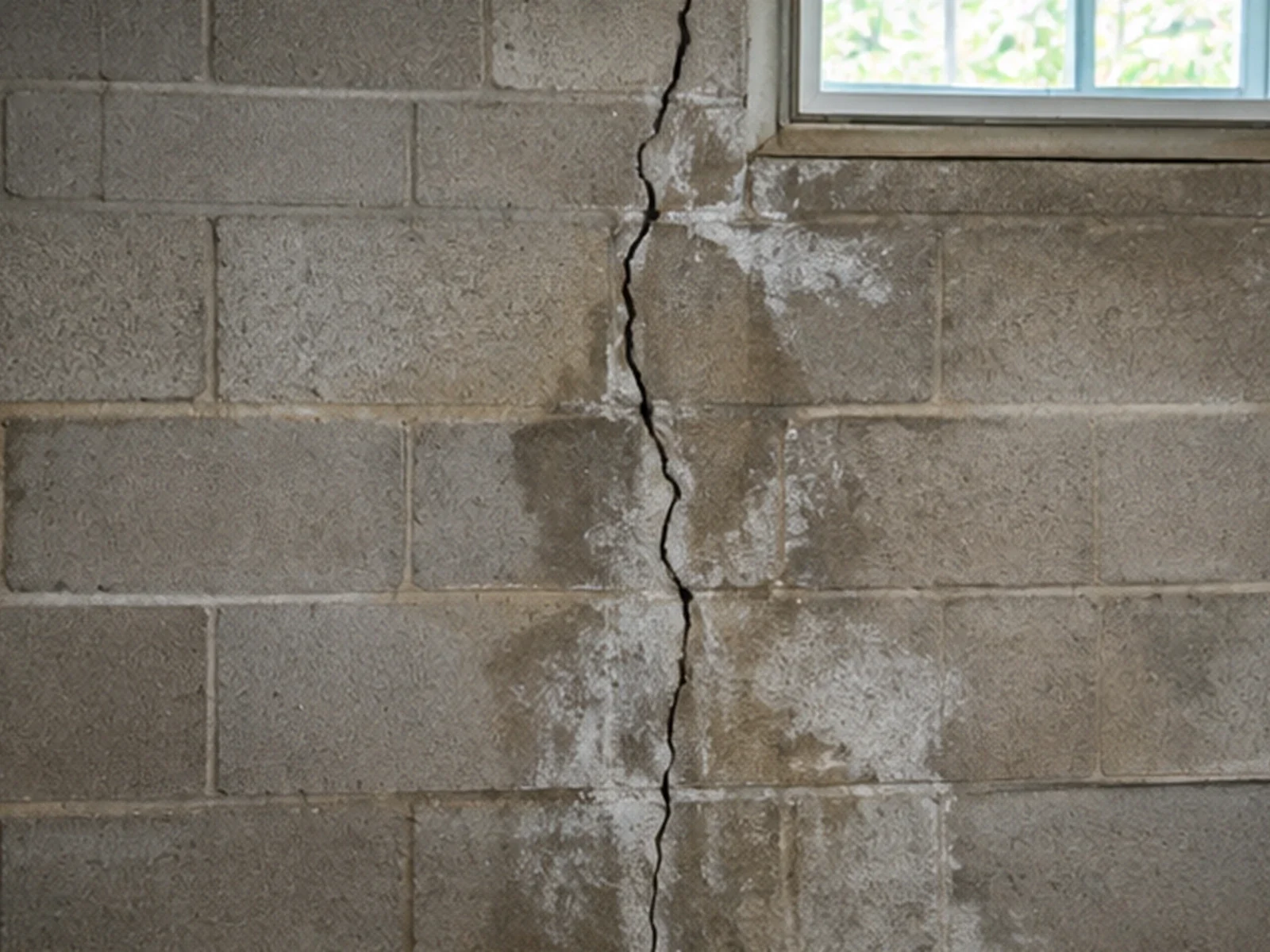
- Foundation Crack Repair
- Nov 18, 2026
- 6 min read
Columbus winters can crack a basement wall, but they rarely do it alone. Frost, wet clay soil, and old shrinkage cracks work together, and most cracks you will see are small and stable. This guide explains how winter stresses a foundation, which cracks need a professional look, and what you can do before the next freeze.
Do Columbus winters cause foundation cracks in basements?
They can contribute, but winter is usually one cause among several. Freezing weather adds stress through frost in the soil, water in the ground that expands as it freezes, and clay that swells when wet. A wall that is already weak, old, or under water pressure is the one that cracks.
Many basement cracks have nothing to do with the season. Vertical hairline cracks in poured concrete are commonly shrinkage cracks from curing. US Waterproofing describes hairline cracks under 1/16 inch wide that are vertical and not leaking as usually cosmetic. The cracks to take seriously are the ones that are horizontal, stair-stepped, widening, or wet.
The honest answer for Columbus is that winter makes a bad situation worse and a marginal one visible. If a crack opens in January, ask what pushed on the wall: frost, saturated soil, or both.
How does frost damage a basement wall?
Frost damages a wall in two ways: it pushes on the wall from the outside and it expands water trapped in the concrete or soil. Ohio Basement Authority says that in cold climates, frost can put pressure on a wall and cause it to fail, especially if the basement is unheated, and that frost forces can lift shallow foundations out of the ground.
- Frost heave: water in the soil freezes and expands, lifting or pushing the foundation
- Lateral pressure: frozen, saturated soil pushes inward on the wall, which can cause horizontal cracks and bowing
- Freeze-thaw cycles: water in a crack freezes, widens it, thaws, and refills, so a small crack grows
One source describes frost heave cracks as typically horizontal or stair-step cracks that may open and close with the seasons. A crack that opens in cold weather and narrows in summer is a clue that winter is involved, so record its width at both times.
Why does Columbus clay make winter worse?
Clay holds water, and wet clay pushes harder. Ohio Basement Authority notes that Columbus has a blend of loam, silt, and a good deal of clay, and that clay expands when wet and contracts as it dries, pushing and pulling on the foundation.
Backfill adds to the problem. When a house is built, the space around the basement wall is filled with excavated soil that is looser than the soil around it. Ohio Basement Authority calls the resulting water collection the clay bowl effect, because rain collects in the backfill and presses on the wall. In winter that water can freeze in place.
Columbus does not have a drought season to dry the soil out. Annual rainfall averages about 39.31 inches, and 2018 reached 55.18 inches. Soil that enters winter saturated has more water to freeze and more weight to push against the wall. August 2026 alone brought 9.94 inches against a normal 3.74, so check how wet the soil beside your foundation is before the ground freezes.
How deep does frost go in Columbus?
Frost depth for Franklin County construction is 32 inches. The Franklin County Building Department says the frost depth is 32 inches for conventional construction, and the City of Columbus lists a 32-inch frost line in its climatic design criteria under the Residential Code of Ohio.
That figure is a design rule, not the depth of frost every winter. Code sets it so footings sit below frozen soil. Basement walls typically reach deeper than 32 inches, so the footing normally sits below the frost, while the wall above it faces frozen, saturated soil.
Columbus winters are cold but not extreme. CurrentResults counts about 28 days a year when the temperature never rises above 32°F, and 1991 to 2020 normals put the first freeze around October 23 and the last around April 19. The risk comes from the swings between freezing and thawing across those months, since each swing moves water through the soil.
Which cracks are normal and which need an inspection?
Judge a crack by shape, width, location, and whether it is changing. Angi says horizontal or stair-step cracks on foundation walls need immediate attention from a foundation repair company, and that cracks that leak may need stabilization alongside waterproofing.
- Vertical hairline crack, under 1/16 inch, dry: usually shrinkage; seal and monitor
- Crack wider than 1/4 inch: Bob Vila and Level Engineering advise an inspection by a contractor or structural engineer
- Horizontal crack at mid-wall: Ask the Builder and Angi flag these as among the most serious, since they suggest the soil is pushing the wall inward
- Stair-step crack in a block wall: often shows movement along the mortar joints; do not treat it as cosmetic until the cause is known
- Crack wider at the top than at the bottom: a sign of movement, per Ask the Builder
- Any crack that leaks, grows, or is paired with a bowing wall
Sources vary on thresholds. Groundworks lists cracks wider than 1/10 inch as signs of a serious problem, and others use 1/4 inch. Use the narrower number if you are unsure, because an inspection costs little next to a failed wall.
How do you monitor a crack through the winter?
Measure it, mark it, and watch it. A static crack is much less concerning than one that is actively growing, as Level Engineering puts it, and a record turns a guess into evidence.
- Photograph the crack with a ruler or coin beside it, and write down the date and outdoor temperature
- Measure the width at its widest point once a month, and after each hard freeze and thaw
- Draw a pencil line at each end of the crack and date it, so you can see any extension
- Look for new damp spots, white mineral deposits, or a spreading stain trail
- Check whether interior doors or windows start to stick, which can signal movement
Share the log with any contractor or engineer you call. They will diagnose faster, and you will have an objective record if the wall changes. A crack that widens between January and March, then closes, points to frost and soil moisture. A crack that keeps growing all year points elsewhere.
What can you do before winter to reduce the risk?
Keep water away from the wall before it freezes. The cheapest steps are the ones that move rain and snowmelt away from the foundation.
- Clean gutters in late fall and extend downspouts so they discharge several feet from the wall
- Check the grade near the foundation, which should fall away from the house; the International Residential Code asks for 6 inches of fall in the first 10 feet
- Fill low spots and compacted gaps beside the wall before the ground freezes
- Disconnect hoses and make sure sump pump discharge ends where ice will not form a hazard
- Keep the basement heated or at least above freezing, since an unheated space is more exposed to frost
- Seal small dry cracks before cold weather so water cannot freeze inside them
Check again in spring. After the thaw, walk the basement and compare each crack with your winter photos. New damp spots, a wider crack, or a wall that has moved since fall are all reasons to call before the spring rains arrive.
Do not pile snow against the foundation. Melting snow adds water right where the wall is exposed. If you plow or shovel, push it away from the house, and keep the walkway clear so meltwater has somewhere to go.
How are winter foundation cracks repaired?
The repair depends on the crack’s cause, and the cause decides whether it is a sealing job or a structural one. A dry, stable crack gets sealed, a leaking crack gets injected, and a bowing or horizontal crack needs the wall stabilized and the water source addressed.
- Hairline, dry: seal with a concrete-compatible sealant, per Bob Vila for narrow cracks
- Leaking vertical crack: epoxy or polyurethane injection from the inside, about $250 to $1,000 per crack in national cost guides
- Horizontal or stair-step crack: a structural assessment first, since sealing alone does not stop the force behind it
- Wet walls from soil pressure: add drainage so water does not build up beside the foundation
Ask for the cause in writing before you approve the work. Ask the Builder warns against applying polyurethane sealant to stair-step cracks, calling it a waste of money, because the wall is moving. For how injection and sealing work, our foundation crack repair page covers the steps, and a good quote names the cause, the method, and the warranty. If a crack has changed since fall, our Columbus basement waterproofing team can look at it and tell you what is driving it, and our cost guide for Columbus basements shows what repairs cost.
Frost depth: Franklin County Building Department and City of Columbus. Crack guidance: Angi, Bob Vila, Ask the Builder, Groundworks, and US Waterproofing. Prices are national ranges, not quotes.
Share this article :