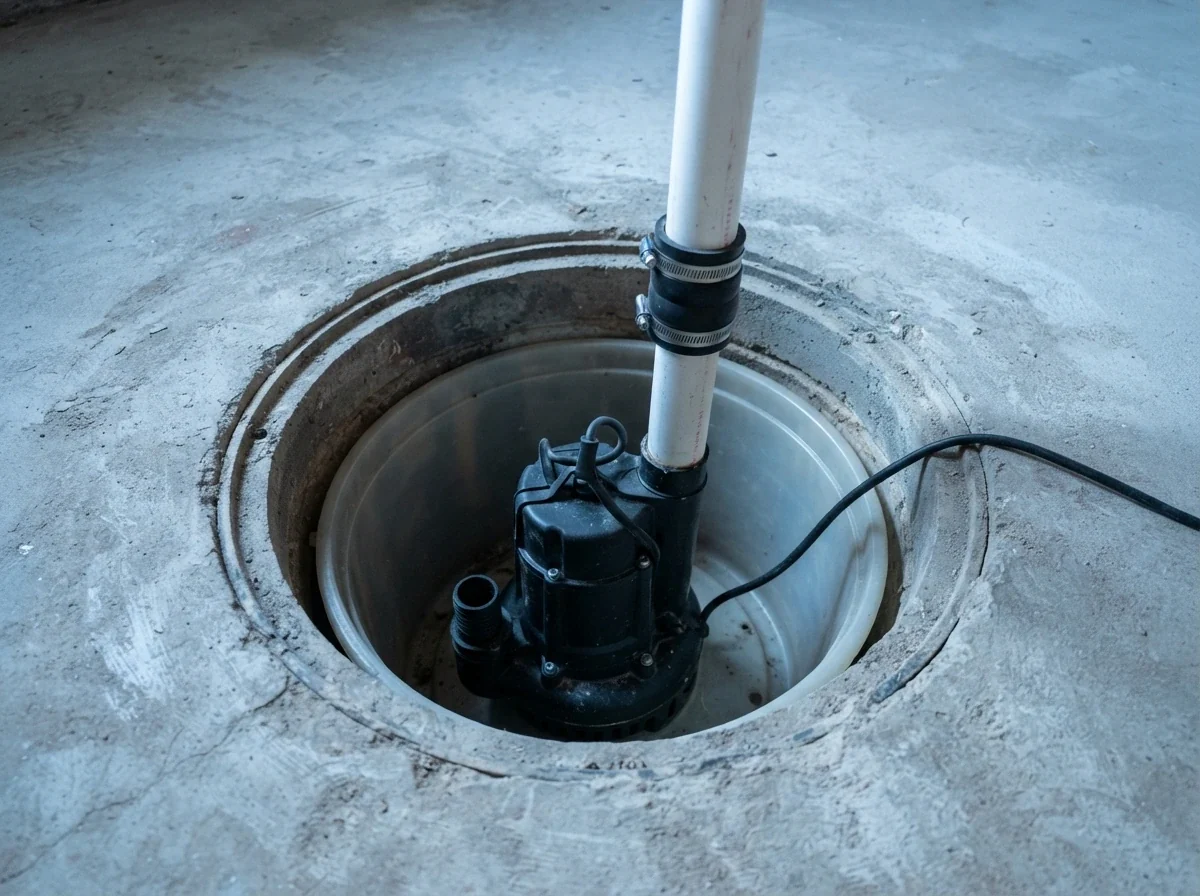
- Sump Pump Installation
- Nov 18, 2026
- 7 min read
A sump pump in an Ohio basement typically lasts 7 to 10 years with good maintenance. Pumps that run often, sit in dirty pits, or lose power during storms can wear out sooner, and a few pedestal models last far longer. This guide covers what shortens a pump’s life, the warning signs, how to test it, and what replacement costs.
How long does a sump pump last in an Ohio basement?
Most sump pumps last 7 to 10 years. Angi says a pump should be replaced about every 7 to 10 years with good maintenance, and American Family Insurance suggests considering a replacement once a pump passes 7 years, especially if it has been running hard.
Some pumps beat that range and some miss it. Do it Best puts the life of a pump that runs often at 5 to 7 years, and other sources describe well-built models reaching 15 years or more. Age is a guide and not a deadline. The better question is how many hours your pump has worked, which depends on your lot and your weather.
Columbus gives pumps plenty of work. The city averages about 39.31 inches of rain a year, 2018 reached 55.18 inches, and August 2026 delivered 9.94 inches against a normal 3.74. A pump that cycles through a wet year like that has done several normal years of work in one.
Do pedestal and submersible pumps last the same time?
No. The two types wear differently. A pedestal pump keeps its motor above the pit, out of the water, while a submersible pump sits in the water and is sealed against it. Bob Vila notes that pedestal pumps tend to last longer because the motor stays dry, and that submersible pumps may last less time because of constant contact with water.
- Pedestal: HomeAdvisor says a pedestal pump can last up to 25 years with routine care
- Submersible: HomeServe says they typically last up to 15 years
- Typical middle ground: 7 to 10 years for both, per Angi and Bob Vila
Longer life is not always the better buy. Submersible pumps are quieter and sit out of sight, and most new installs use them. A pedestal pump is easier to reach and service but is louder and takes up floor space. The right choice depends on the pit, the noise you can live with, and how often you will check it.
What shortens a sump pump’s life in Columbus?
Run time, dirt, and power loss do the most damage. Angi says lifespan depends on how often the pump runs, whether it has enough capacity for your water volume, and regular cleaning to prevent wear.
- High water table and clay soil: Franklin County guidance notes clay-heavy soils and a seasonally high water table that keep water coming back to the pit
- Undersized pump: a pump too small for the inflow runs nonstop and burns out sooner
- Debris in the pit: silt, gravel, and mud jam the float and the impeller
- Stuck float switch: the pump either never starts or never stops
- Power outages: storms that bring the most water also knock out electricity, as happened across Columbus on August 11, 2026
- Poor installation: a missing check valve or a badly routed discharge line makes the pump work harder
Winter adds another problem. Water pumped out in freezing weather can turn to ice on walks and drives, so the discharge should end where runoff will not create a slip hazard. Columbus frost reaches about 32 inches, so keep an eye on the part of the line that sits outside.
What are the signs a sump pump is wearing out?
A pump that is failing usually tells you first. Watch and listen for changes after each heavy rain.
- It is over 7 years old, especially if it runs often
- It runs constantly or cycles every 20 seconds or so, which Roto-Rooter lists as a reason to call a plumber
- It makes grinding, rattling, or humming sounds
- It vibrates hard or shakes in the pit
- Rust or heavy corrosion appears on the base or switch
- It does not start when you pour water into the pit
- It rarely turns on, because AmFam says pumps that sit idle for long stretches can wear out sooner
Noise is the first thing most owners notice. A healthy pump hums, runs for a short time, and shuts off. A pump that rattles, screams, or runs on after the pit is empty is moving air or fighting a jam. Rust at the base, a cracked housing, or a cord that is frayed or warm to the touch are also reasons to stop and call someone.
Do not wait for a flood to confirm a problem. If the pump has even one of these signs and a storm is forecast, test it that day and have a plan for a backup or a replacement.
How often should you test and maintain a sump pump?
Test it every three to four months and before major storms. Farmers Insurance says to test every few months and before big storms, and Do it Best says at least once every three months. A full inspection once a year is also a common recommendation.
- Pour a 5-gallon bucket of water into the pit; the pump should start, empty the pit, and shut off
- Clean the pit and the pump about twice a year to clear silt and debris
- Check the float so it moves freely and is not wedged against the side
- Inspect the discharge line and check valve for clogs, leaks, or damage
- Confirm the outlet sends water away from the house and not toward a neighbor
Early spring, before the wet months, is the best time for the full inspection. Each test takes minutes, and it is the cheapest way to extend the pump’s life.
Keep a simple log. American Family Insurance suggests a sump pump journal to track performance and maintenance, and it works: a note with the date of each test, the date you cleaned the pit, and the date of any repair shows you the age of the pump and how its behavior has changed. If a plumber or insurer asks about the pump’s history, you can answer in one minute.
How long does a backup battery last?
Plan on a replacement every 3 to 5 years, and sooner if the battery has been used a lot. Sources differ. This Old House and Roto-Rooter say 2 to 3 years, and Batteries Plus says a well-kept battery typically lasts 4 to 5 years. Follow the manufacturer’s guidance, and test it every 6 months or so.
Test it separately from the main pump. Unplug the primary pump, pour water into the pit, and confirm the backup starts. If the backup has not been used in over a year, Batteries Plus advises testing it as soon as possible.
A battery backup matters in Columbus because outages come with the biggest storms. The August 11, 2026 storms cut power across the city while the rain continued for days. A battery runs a backup pump for hours, not days, so it protects you through an outage but does not replace a healthy primary pump.
Should you repair or replace an aging sump pump?
Replace it when it is past 7 to 10 years and showing wear, and repair it when the fault is simple. A stuck float, a clogged intake, a failed check valve, or a tripped outlet can usually be fixed without a new pump.
- Repair: a new float switch, a cleaned impeller, a new check valve, or a corrected discharge line
- Replace: loud or grinding motor, rust, constant running, a pump over 10 years old, or one that failed during a storm
- Upgrade: a larger pump, a backup, or an alarm if the pit fills faster than the pump can empty it
Do not trust the pump just because it still turns on. An old pump may start in a bucket test and still fail under the load of a real storm. If a storm is close and you are unsure, replace first and inspect later. A pump failure can mean standing water on the floor, and our emergency basement leak repair page covers what to do if that happens.
What does sump pump replacement cost in Columbus?
Angi lists $990 to $2,200 for sump pump installation in Columbus. For replacements, HomeAdvisor reports a national range of $645 to $2,102, with an average of $1,353. The price depends on the pump type, horsepower, pit condition, discharge line, and labor.
- Backup battery only: $150 to $250 per This Old House
- Primary pump with a backup battery: $150 to $2,000, per This Old House
- Water-powered backup pump: $200 to $900, per This Old House
- Plumbing permit for a pump or drain in Columbus: $250, per Angi
Ask each quote to state the pump brand and horsepower, the pit size, the check valve, the discharge route, the backup type, and the warranty. Angi says new pumps usually carry a one-to-three-year manufacturer warranty, and that a home warranty policy, if you have one, typically covers pump repair and replacement after that expires. Read the policy terms, since coverage and limits vary. If you would like to see how we handle the work, our sump pump installation page explains the process, and a written quote will name every part. To have a pump tested or replaced, reach out to our Columbus basement waterproofing team, and read why basements leak in heavy rain in this guide if yours has already taken in water.
Lifespan and maintenance: Angi, Bob Vila, HomeAdvisor, Farmers Insurance, Do it Best, and Batteries Plus. Cost: Angi, HomeAdvisor, and This Old House. Prices are not quotes.
Share this article :