Why homeowners choose us
Fast Response
Quick scheduling and rapid help when water is actively entering.
Transparent Pricing
A clear quote after inspection and before any work starts.
Fully Insured
The contractors we work with carry insurance, explained before any work begins.
Local Expertise
Experienced waterproofing crews who know Central Ohio homes.
Our process
- 1
Call In
You call and describe what is happening.
- 2
Find Source
We locate where water is entering.
- 3
Stop Water
We make the first repair or restore the pump.
- 4
Plan Fix
We outline a lasting fix with a written quote.
What counts as a basement leak emergency in Columbus?
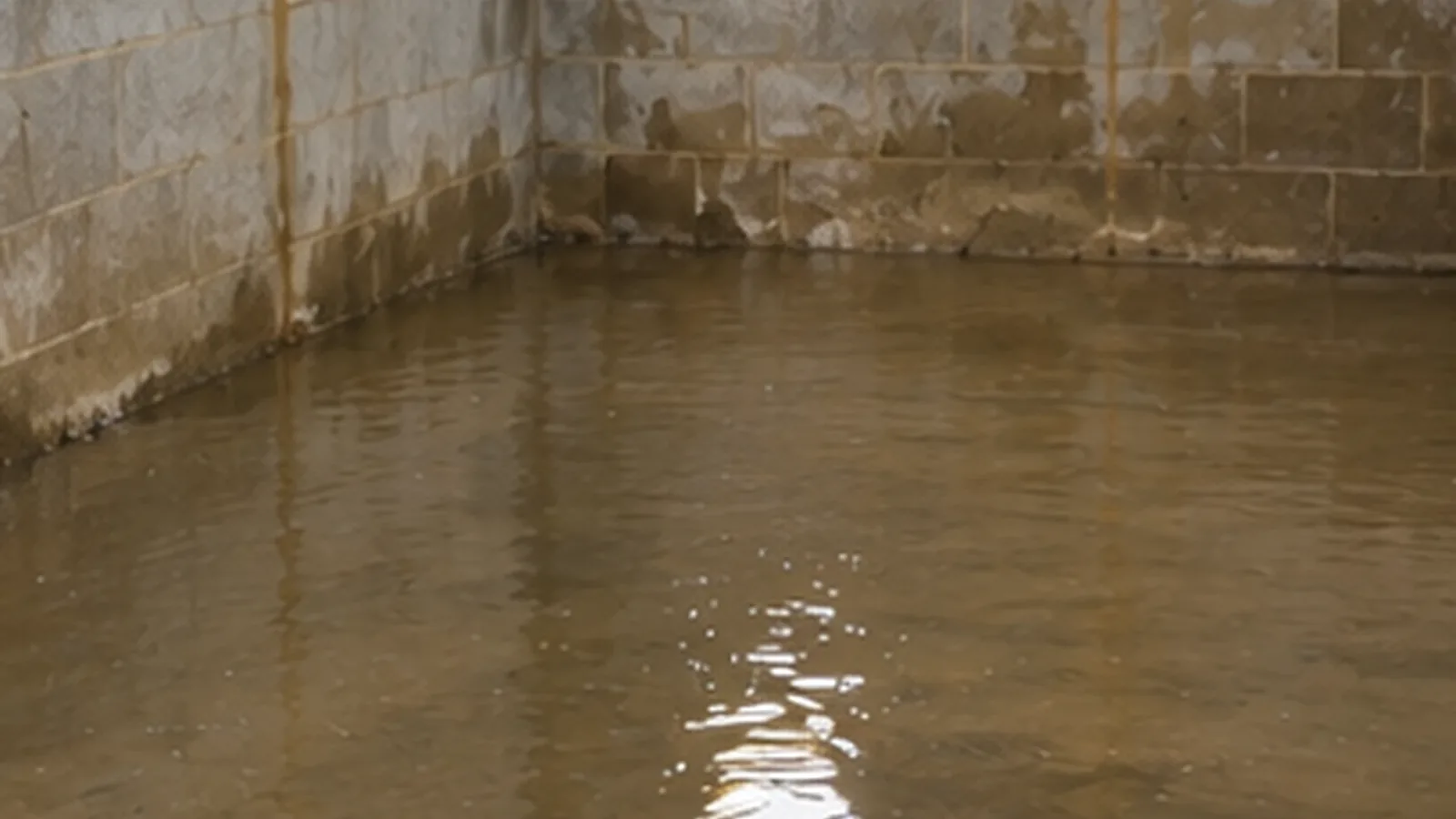
A basement leak is an emergency when water is rising, is near electrical equipment, is coming from a sewer line, or has stopped a sump pump from keeping up. Slow dampness along a wall is a repair problem you can schedule. Water on the floor that keeps coming is not, because every hour it stays raises the cost and the mold risk.
Columbus gets this kind of rain. The city averages about 39.31 inches a year, and on August 20, 2026, it recorded 2.87 inches in a day, a daily record according to the National Weather Service. Ohio State researchers found that days with more than 1.25 inches of precipitation rose 78% between 1951 to 1980 and 1981 to 2010. Heavy storms like that overload sump pumps, saturate clay soil, and push water through the weakest point in a wall or floor. Our guide on why a Columbus basement leaks after heavy rain covers the usual entry points.
Treat these as emergencies:
- Water on the floor that keeps rising, or covers outlets, the panel, or appliances
- Water coming up through a floor drain, which can mean a sewer backup
- A sump pump that has stopped, runs nonstop, or cannot keep up
- Water pouring through a wall crack, window well, or wall-to-floor joint
- A burst or leaking pipe you cannot shut off
What should you do in the first hour of a basement leak?
In the first hour, protect yourself first, stop the source if you can, and call for help. Standing water can carry an electrical current, which can cause electric shock or start a fire. Do not walk into a flooded basement if water is near outlets, the electrical panel, or plugged-in appliances.
- Shut off electricity to the basement at the main panel only if the panel is above the water and you can reach it without stepping in water; if not, call the utility to cut power at the meter
- Shut off the main water valve if the leak is from a pipe
- Do not run an electric pump from the home’s electrical system; the University of Missouri Extension advises using a gas-powered pump outside the house or one on an outside line
- Do not turn on faucets below flood level until the water recedes, a Columbus city page advises
- Take photos and video of the water, damage, and belongings before you move anything
Do not pump the basement dry all at once. FEMA says to pump out gradually, about one third of the water per day, because the walls can collapse and the floor can buckle if the surrounding ground is still waterlogged. For deeper water, several state guides say to pump about a foot, mark the level, and check the next day. If the level rose, wait another 24 hours.
Is it a sewer backup, a pipe, or groundwater?
The source decides who fixes it, and who pays. Groundwater leaks through walls and floors, pipe leaks come from supply or drain lines, and sewer backups come up through floor drains. Gray or foul-smelling water, or water rising from a drain during a storm, points to a sewer backup.
If sewage is coming up from a floor drain, call the City of Columbus Sewer Maintenance Operations Center right away at 614-645-7102, which is staffed 24 hours a day, or call 311. The report matters: for the city’s Project Dry Basement program, a backup must be reported within 24 hours of the incident so staff can determine the cause. If the city finds that excess rain in the sanitary sewer caused it, the home may qualify for a backflow prevention device installed by the city’s contractor. Keep the service request number.
Damage entirely on private property is the responsibility of the property owner and their insurance carrier, the city says. Groundwater and pipe leaks inside the house are private matters. A contractor can help you tell them apart, but call the city first if the water is rising from a drain. If the flooding is in the street or a neighborhood, report it to 311 as well.
How fast do you have to dry a leaking Columbus basement?
Dry everything within 24 to 48 hours. EPA guidance says that if wet materials are dried within 24 to 48 hours, in most cases mold will not grow, and that you should assume you have mold if you were not able to dry a flooded home within that window. The EPA also says flood water may have carried sewage or chemicals into your home.
The drying plan runs in this order: remove standing water, open the space to air, run fans and dehumidifiers, and pull up or open materials so they dry on all sides. EPA moisture guidance calls for carpet and backing to be dried within 24 to 48 hours with water extraction and dehumidifiers. Materials that have been wet longer than 48 hours and cannot be cleaned and dried should be thrown out.
Visible mold takes longer than that. One restoration source notes tests on wet building materials where visible mold took about five days to two weeks, and that it can grow out of sight, so do not wait for a stain to act. Keep indoor humidity under 60%, and ideally in the EPA’s 30% to 50% range. If the water was sewage or came from outside, hard surfaces need cleaning and disinfecting, and porous items such as carpet pad and drywall often need to go.
How does emergency basement leak repair stop the water?
Emergency repair works in two stages: stop and remove the water now, then fix the cause so it does not return. The first stage can happen the same day. The second usually cannot, because it depends on dry conditions and on finding where the water came from.
- Stage one: pump-out, wet vacuum, and drying equipment
- Temporary plugging of an active leak, such as hydraulic cement at a joint or a crack
- A replacement sump pump, a battery backup, or a temporary pump if the pit has failed
- Stage two: crack injection, an interior drain and sump, exterior waterproofing, or grading and gutter repair, depending on the source
A temporary patch is not a repair. A crack that leaks under pressure may be sealed from inside by injection, and that is covered on our foundation crack page. If the water keeps returning to the same wall or floor joint, an interior drain with a sump is often the lasting answer, and exterior waterproofing is the heavier option. Ask the contractor to state which stage each line on the quote belongs to.
How much does emergency basement leak repair cost in Columbus?
Cleanup after a basement leak most likely costs about $3 to $7 per square foot, with typical totals of $2,000 to $7,000, based on national figures. Angi says emergency water extraction and pump-out can add $300 to $2,000 depending on the amount of water. No Columbus-specific average is published, so use these as a rough check on a quote.
The type of water changes the price. A cost guide citing Angi lists clean water at about $3 to $4 per square foot, gray water at $4 to $6.50, and black water, which includes sewage, at $7 to $7.50. Restoration firm SERVPRO publishes similar ranges, from $3.50 per square foot for a minor clean-water spill to $7.50 for severe flooding or sewage. HomeAdvisor’s wider range for a flooded basement is $1,500 to $15,000, with an average near $4,000.
Those numbers cover extraction, drying, and cleaning. Rebuilding drywall, flooring, and finishes comes after, and repairing the leak itself is billed separately. Finished basements cost more, because wet drywall, insulation, and carpet have to come out. Ask for a written scope that separates emergency work, drying, and the permanent fix.
Will insurance cover a basement leak in Columbus?
It depends on the source of the water, and many Ohio policies do not cover sewer backups or sump pump failures unless you added an endorsement. The Ohio Department of Insurance has said that sewer backups, and sump pumps unable to handle runoff from a major downpour, are not covered by a typical homeowners policy or by flood insurance. Nationwide makes a similar point, noting that most homeowners policies do not automatically include sewer and drain backup coverage and that you can buy an endorsement.
Burst pipes and sudden internal leaks are treated differently from groundwater seepage or sewer backup, so read your policy before you assume anything. Columbus tells residents with flooding or sewer-backup coverage to notify their insurance company. If you need help understanding your policy or have a dispute with your insurer, the Ohio Department of Insurance takes calls at 1-800-686-1300.
Document everything before cleanup. Photograph the water level and damaged items, keep receipts for pumps, dehumidifier rentals, and cleaning, and ask your insurer if it wants to inspect before you pump. Keep the city service request number if a sewer backup was reported. If the city’s Project Dry Basement program installs a device, note that homeowners who join it must waive damage claims tied to city sewer backups, according to local news reports, so read the terms before you sign.
How do you hire an emergency basement leak contractor in Columbus?
Hire a Columbus contractor who answers when you call, explains in writing what is emergency work and what is the permanent fix, and does not ask for the full payment up front. Storm damage can attract contractor fraud. After the August 2026 flooding, the City of Columbus pointed residents who suspect it to the Ohio Attorney General at 1-800-828-0348.
- A plain statement of the source: groundwater, pipe, or sewer
- Itemized emergency work, drying, and permanent repair, each priced separately
- A license or registration where your city requires one, and proof of liability insurance; the contractors we work with carry insurance coverage, and you should still ask to see it
- A written warranty for the repair, and what it covers if the leak returns
- No large deposit, and no pressure to sign on the spot
Photos of the cause, such as the crack, the failed pump, or the open joint, are a sign of an honest diagnosis. If you are quoted a permanent fix on the first visit during an active flood, ask what the contractor will check once the ground and the wall are dry. A good contractor will help you stop the damage first and talk about the rest when you are not standing in water.
When to call a professional. Call right away if water is rising, a sump pump has stopped, or water is near electrical equipment. Stay out of standing water if outlets or appliances are nearby.