Why homeowners choose us
Fast Response
Quick scheduling and rapid help when water is actively entering.
Transparent Pricing
A clear quote after inspection and before any work starts.
Fully Insured
The contractors we work with carry insurance, explained before any work begins.
Local Expertise
Experienced waterproofing crews who know Central Ohio homes.
Our process
- 1
Test Walls
We check moisture and find the damp zones.
- 2
Prep Surface
Walls are cleaned and prepped.
- 3
Apply Sealer
Sealer or coating goes on in layers.
- 4
Check Humidity
We measure humidity and share upkeep steps.
What does basement wall sealing involve in a Columbus home?
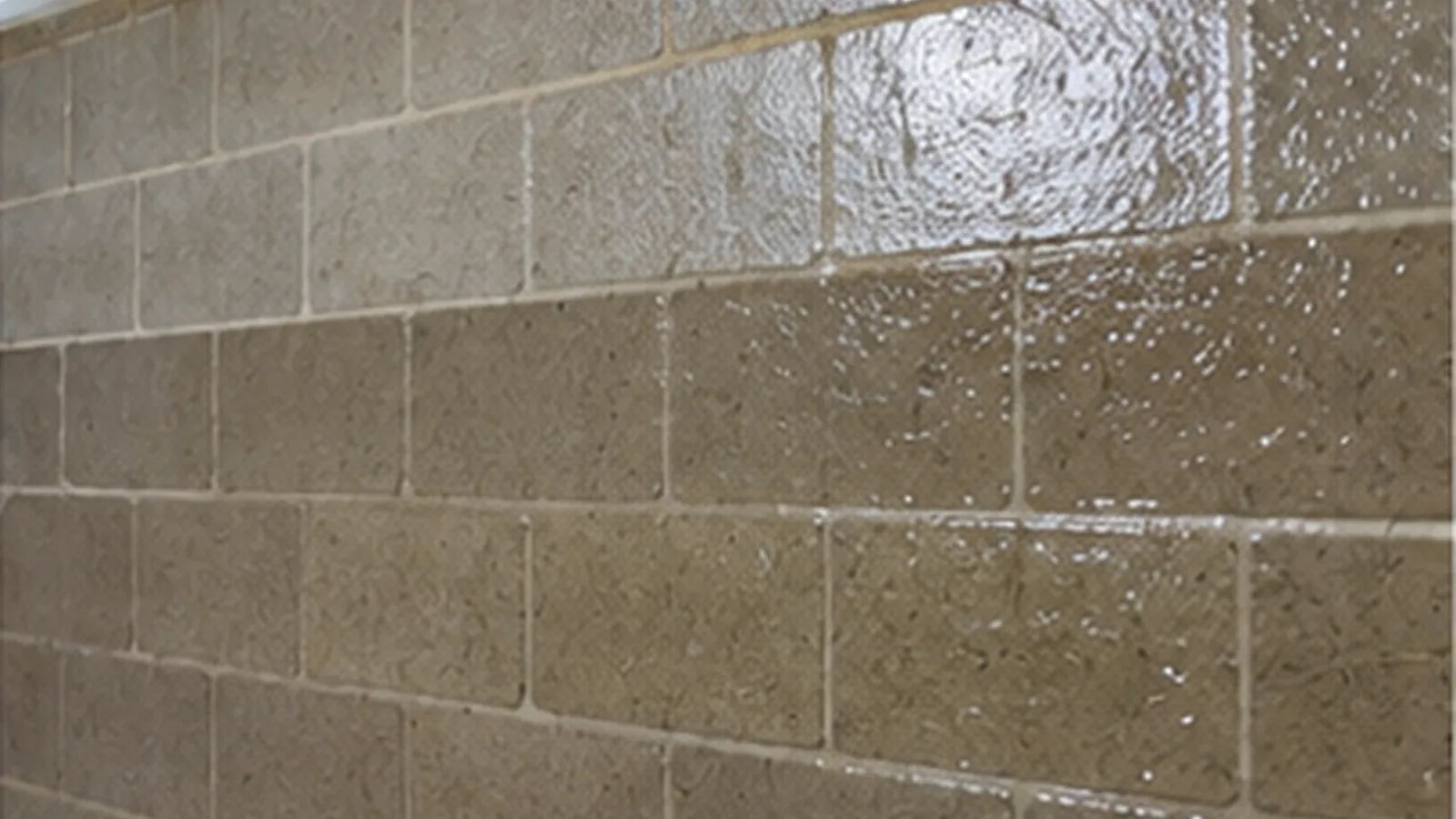
Basement wall sealing means cleaning the interior face of a basement wall, patching its holes and cracks, and coating it with a masonry sealer that slows moisture moving through the concrete or block. In a Columbus home it is the lowest-cost way to deal with damp walls, white mineral deposits, and musty air. It works best on walls that are damp, not walls that run with water after rain.
A typical job follows this order:
- Clear the wall, then scrape off loose paint, old coatings, and white mineral deposits
- Wire-brush and rinse the surface so the sealer can reach bare masonry
- Fill holes, joints, and cracks with hydraulic cement or a patching compound, and let it cure
- Test the wall for moisture before coating
- Apply two coats of sealer, one in each direction, and let each dry fully
- Check the wall after the next heavy rain
Prep is most of the work. Bob Vila’s guide says sealer sticks only to bare masonry, so paint has to be removed first, and white deposits should come off before anything goes on. If a sealer goes over paint, the bond is only as strong as the paint’s bond to the wall.
Why do Columbus basement walls let moisture through?
Columbus basement walls let moisture through because poured concrete and concrete block are porous, and wet soil pushes water into them from outside. Building-science writers describe concrete as porous by design, with water moving through it by hydrostatic pressure, vapor, or capillary action. Water also enters at cracks, joints, and openings around pipes.
Local weather keeps the soil wet. Columbus averages about 39.31 inches of rain a year, and 2018 set a record at 55.18 inches. Ohio State researchers found that days with more than 1.25 inches of precipitation rose 78% between 1951 to 1980 and 1981 to 2010. Franklin County uses a 32-inch frost depth, so the soil beside a wall freezes and thaws each winter. Clay-heavy soils in parts of the county drain slowly, and that keeps pressure on the wall.
Many older homes lack the coatings and drainage newer houses get. An Ohio contractor’s guide notes that many central Ohio homes were built before modern waterproofing methods were standard. The result is a wall that wicks moisture from the soil in spring, then dries in fall, leaving white salts behind. Those salts, called efflorescence, are a sign that water has traveled through the wall.
How do you tell seepage from condensation on a basement wall?
You can tell the two apart with a plastic-sheet test: tape a square of plastic tightly to the wall for a day or two. Moisture on the wall side means water is moving through the concrete, and moisture on the room side means humid indoor air is condensing on a cool surface. One guide calls the test a rough indicator, not a diagnosis, and results change with the season and weather.
Humidity numbers give a second clue. The EPA recommends keeping relative humidity between 30% and 50%, and a hygrometer costs little. An Ohio contractor puts the state’s average humidity at 69%, well above the ideal basement range, and Columbus summers are humid. A wall that sweats in July and stays dry in January is likely a condensation problem, which a dehumidifier fixes better than a sealer. A wall that darkens after a storm is seeping. Our guide on what humidity level a Columbus basement should stay under covers how to measure it and what to do when it stays high.
Look for the pattern. Damp rings low on the wall, dark streaks below a window well, and white salts in bands point to groundwater. A dry wall with beads of moisture on cold pipes and rim joists points to humid air. Many basements have a bit of both, which is why checking before buying sealer saves money.
Which sealer fits a Columbus basement wall?
A masonry waterproofer, or a silicate or crystalline sealer, fits a damp interior wall, and a patch of hydraulic cement fits holes and cracks. No coating fits a wall under standing water pressure. Polyguard notes that poured concrete accepts silicate sealers well, and that wall type and site conditions change how long a sealer performs.
- Masonry waterproofer (thick paint-like coating): fills pores, slows seepage and vapor, and goes on with a roller or brush in two coats
- Silicate or crystalline sealer: soaks into the concrete and reacts with it, so it does not form a film that can peel
- Hydraulic cement or patching compound: plugs holes, tie-rod pockets, and the joint where the wall meets the floor
- Elastomeric or liquid-rubber coating: a flexible film that bridges hairline cracks
Testing gives useful detail. Green Building Advisor’s tests found that Drylok stopped water from wicking through but did not stop water under hydrostatic pressure, while a crystalline product, Xypex, did stop water under pressure. One non-crystalline coating failed to produce a waterproof system at 2 feet of head or more. Those are single-author lab tests, not Columbus field results. Angi quotes a waterproofing expert warning that sealants can trap water in foundation walls and cause problems later.
How much does basement wall sealing cost in Columbus?
Basement wall sealing in Columbus most likely costs about $1 to $8 per square foot of wall for a coating, and $3 to $10 per square foot for a full waterproofing job. No Columbus-specific average has been published, so these are national figures. Angi lists waterproofing paint or sealant at $1 to $8 per square foot, and puts damp proofing at $3 to $6 compared with $5 to $10 for thorough waterproofing.
A rough example helps. A 130-foot perimeter with 8-foot walls has about 1,040 square feet of wall, which is our arithmetic and not a quoted job. At $1 to $8 per square foot, that is roughly $1,000 to $8,300, and at $3 to $6 it is about $3,100 to $6,200. This Old House puts the average for a 1,000-square-foot basement at $3,000 to $10,000 for waterproofing in general, with data from Angi, Fixr, and HomeAdvisor.
Finished basements cost more, because drywall or paneling has to come off first and go back afterward. Crack and joint repair add to the total. This Old House lists interior epoxy injection at $350 to $500, and wall repairs found behind finishes can add to that. Do-it-yourself coatings cost much less in materials, but a failed coat on a wall that needed drainage is paid for twice. Ask for a quote that lists the prep, the product, the number of coats, and the area covered.
How long does sealing take, and how long does it last?
Sealing a typical basement takes a few days once prep and drying are counted, and manufacturer warranties on wall coatings run from about 7 to 15 years if the wall stays dry behind them. Prep and curing set the pace: fresh patching compound should cure before coating, and Drylok’s guidance calls for 7 days of cure for repairs, and 28 to 30 days for new concrete. A weather-dry stretch of 48 to 72 hours helps after cleaning the wall.
Warranty periods give a rough idea. Drylok Original is listed with up to 10 years and Extreme with a 15-year warranty, and a floor-and-wall product with about seven, based on correct application. A minimum of two coats is required for the limited warranty. These are manufacturer claims for the product, not a promise for your wall.
The wall decides the real lifespan. A coating on a wall with steady outside water pressure can blister, peel, and flake off, sometimes taking concrete with it. Where drainage or grading keeps the soil drier, a coating can outlast its warranty. Check the wall each spring. If you see new white salts, bubbling paint, or damp patches, water is getting behind the coating.
When will sealing the wall not be enough in a Columbus basement?
Sealing is not enough when water enters under pressure, when the wall is cracking or bowing, or when white salts and peeling paint keep coming back. Building-enclosure writers argue that waterproofing should be applied on the positive, or wet, side of the structure, and that negative-side coatings cannot fully protect it. Interior coatings hold the water back from the face of the wall but do nothing to move it away.
- Water running down the wall or pooling at its base after rain
- Horizontal cracks, bowing, or stair-step cracks in block
- White salts or peeling that returns within a season or two of recoating
- Standing water or damp floors along the wall joint
In those cases the lasting fix is drainage or exterior work. That could be an interior drain and sump, exterior waterproofing, a crack repair, or simply better gutters and grading. Angi’s waterproofing guide puts gutters and downspouts, grading, and drains on the same list of measures as sealing. Sealing still has a role as a finish layer once the water is controlled.
How do you hire a basement wall sealing contractor in Columbus?
Hire a Columbus contractor who finds the source of the moisture first and tells you in writing what the sealer will and will not do. A bid that is only a coating price, with no diagnosis, is a warning sign. Ask for these items on the quote:
- Whether the wall is seeping, wicking, or sweating, and how the contractor tested it
- Product name, number of coats, and the square footage covered
- How the prep will be done: paint and salt removal, patching, and curing time
- What happens if water shows through within the warranty period
- A license or registration where your city requires one, and proof of liability insurance; the contractors we work with carry insurance coverage, and you should still ask to see it
- Warranty terms in writing, including what voids them
Get at least two or three itemized bids. A contractor who recommends fixing gutters, grading, or cracks before coating is looking at the cause. After the work, mark any damp spots with a pencil and check them after the next heavy Columbus rain.
When to call a professional. Call if walls feel damp or look white and chalky, paint peels, or humidity stays above 60%.